
Search North Carolina Bench Warrants
North Carolina bench warrants are court orders that direct law enforcement to arrest a person who has failed to appear for a scheduled hearing or violated a condition of release. These warrant records are kept by the Clerk of Superior Court in each of the 100 counties and tracked through the statewide eWarrants system. You can search for bench warrants in North Carolina through the eCourts portal, at your local courthouse, or by contacting the county sheriff. Knowing your warrant status helps you take the right steps before a routine stop turns into an arrest.
North Carolina Bench Warrants Quick Facts
How North Carolina Bench Warrants Work
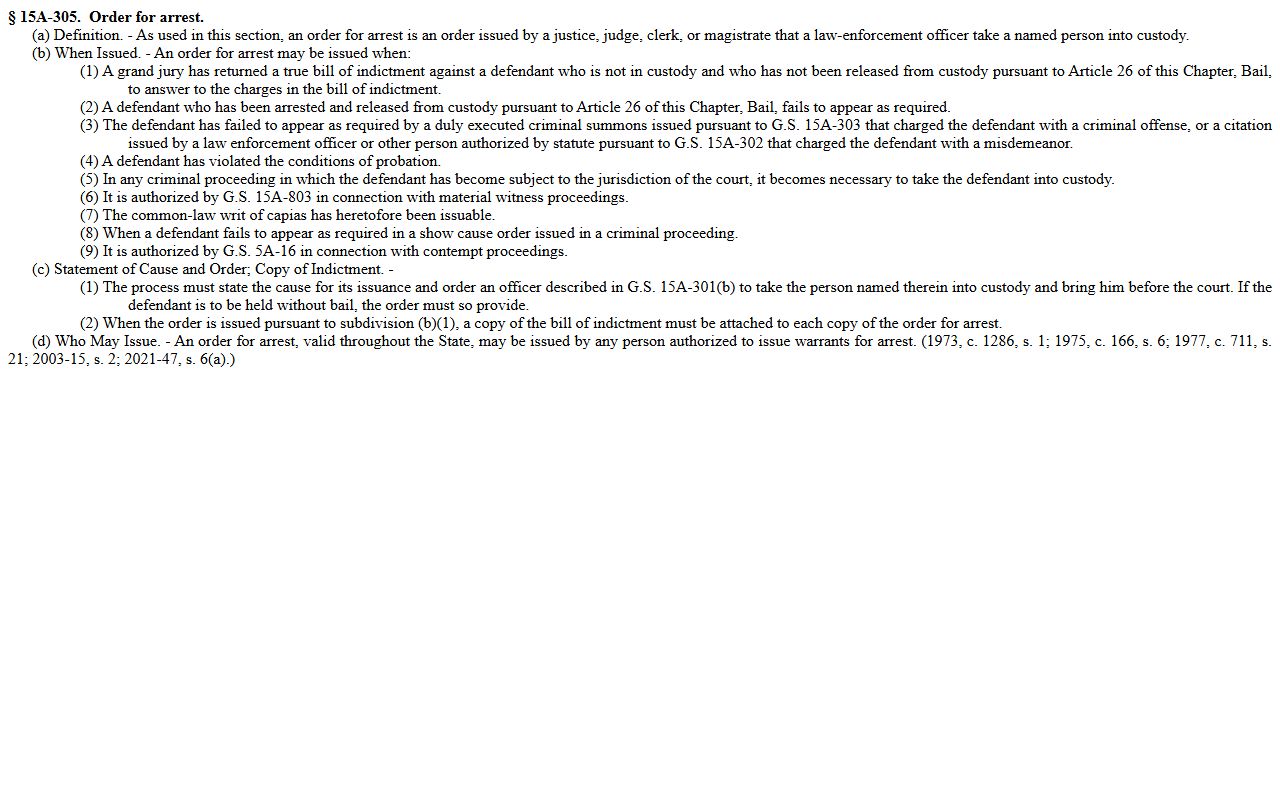
A bench warrant in North Carolina is officially called an order for arrest. This type of warrant differs from an arrest warrant based on probable cause. A judge, clerk, or magistrate issues a bench warrant when a person fails to meet a court obligation. The most common trigger for a bench warrant is failure to appear. Other reasons for issuing a bench warrant include violating terms of pretrial release or not returning to custody as directed under N.C.G.S. 15A-305.
Under North Carolina law, an order for arrest may be issued in five situations. A grand jury returns a true bill against someone not in custody, triggering a bench warrant. A defendant released from jail fails to show up in court, resulting in a bench warrant. A person does not appear as required by a criminal summons or citation, and the court issues a bench warrant. The defendant breaks the conditions of release set under G.S. 15A-534, leading to a bench warrant. Or the person does not return to custody as ordered, prompting a bench warrant. Each of these triggers gives a judicial official the authority to issue an order for arrest in North Carolina. The bench warrant must be in writing and must name the person or describe them clearly enough for an officer to act on the warrant.
Once issued, a bench warrant stays active until served or recalled by the court. There is no time limit on bench warrants or orders for arrest in North Carolina. An outstanding bench warrant can be executed at any point.
Search for Bench Warrants in North Carolina
North Carolina gives the public several ways to search for bench warrants and other active warrants. The fastest method for finding a bench warrant is the eCourts portal run by the Administrative Office of the Courts. This free warrant search tool lets you look up warrants by party name, case number, or citation number. It covers bench warrants across all 100 counties. You do not need to create an account for basic warrant searches. The portal shows case status, court dates, and documents tied to the warrant. Visit nccourts.gov to start a bench warrant search in North Carolina.
The eCourts portal runs on Tyler Technologies' Odyssey system. North Carolina is moving all 100 counties onto this warrant search platform. As of early 2026, 62 counties have gone live. The system replaced older warrant lookup tools like ACIS and CIPRS. It accepts over 3 million electronic filings and handles more than 1.5 million digital warrant searches each month in North Carolina.
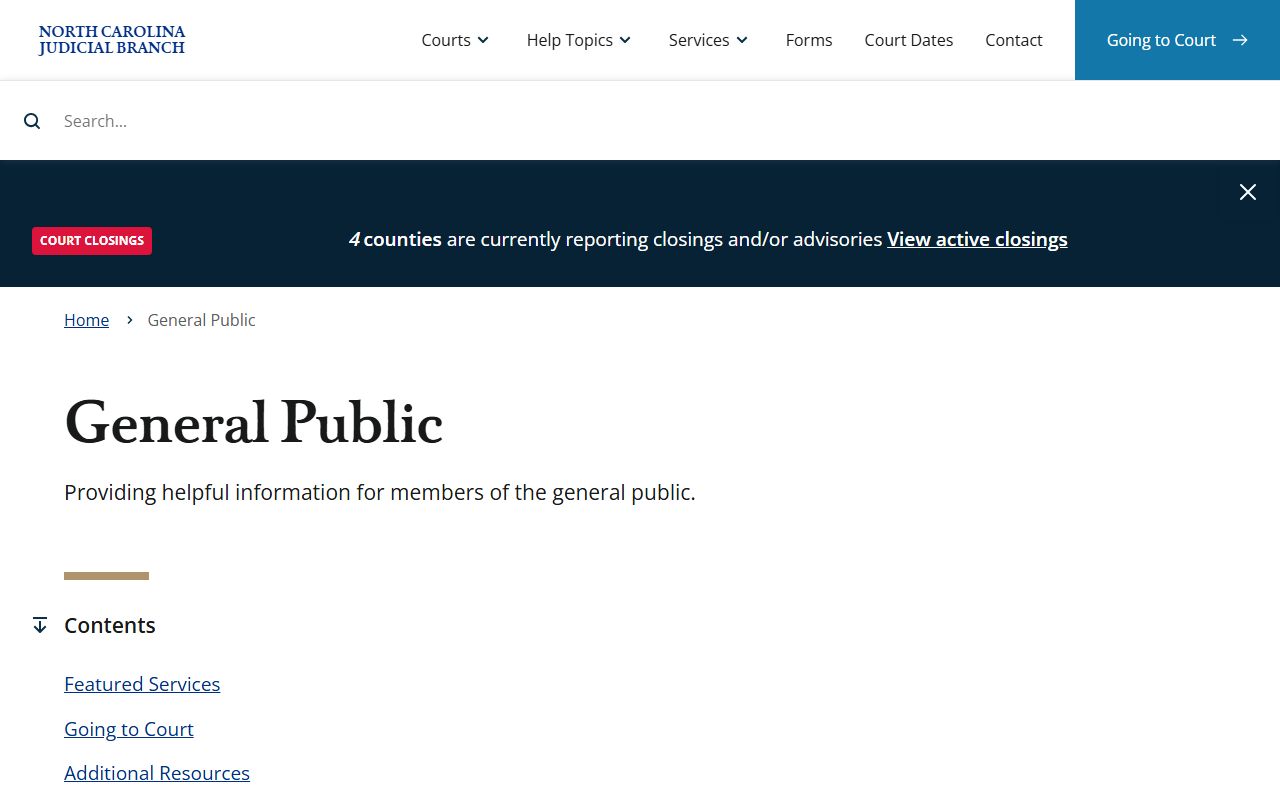
Keep in mind that some bench warrant details are restricted. Criminal warrants that have not been returned are not visible to the public on the portal. Unserved warrants and sealed bench warrants are also excluded. You may need to contact the Clerk of Superior Court or the sheriff in your county for complete bench warrant information in North Carolina.
Note: Registration is not required for basic bench warrant searches, but elevated access to warrant records needs approval from the NCAOC.
North Carolina eWarrants and Bench Warrants
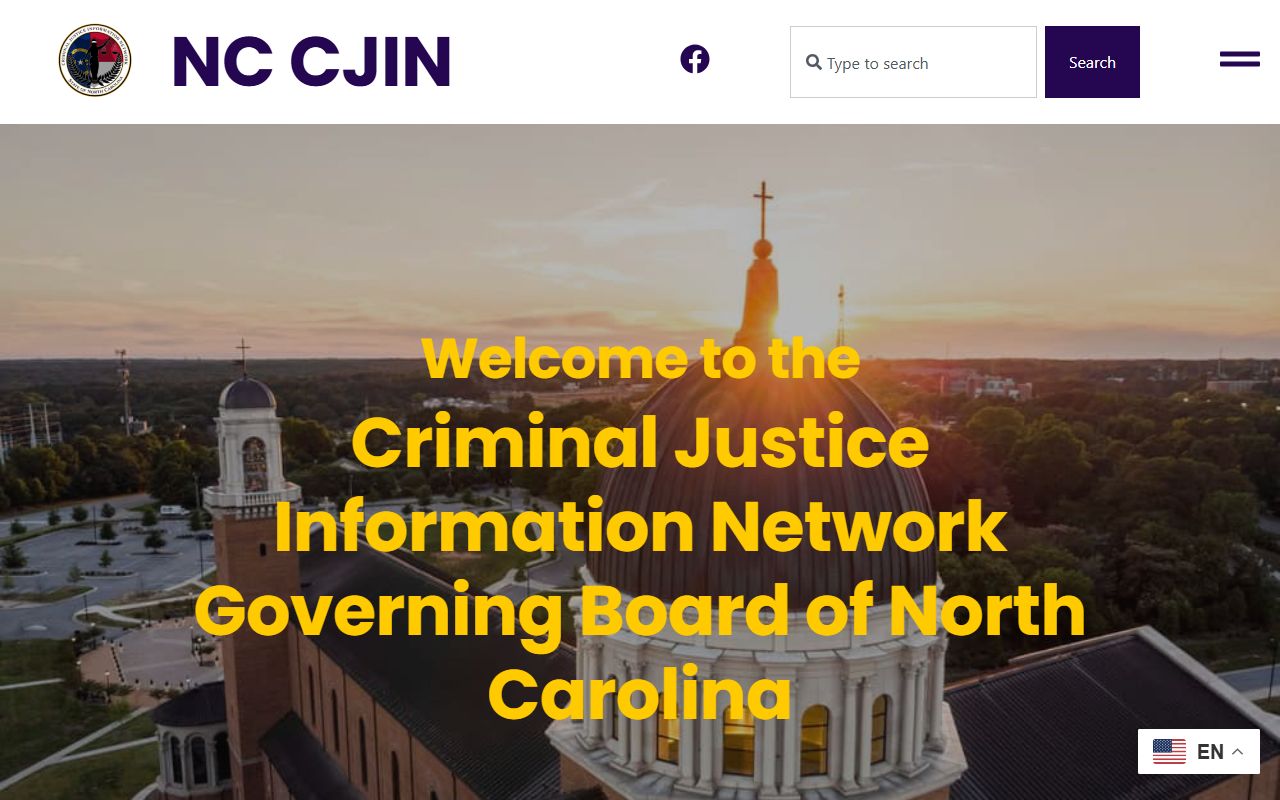
The eWarrants system is the official electronic repository for all warrant and arrest processes in North Carolina. No paper warrants are kept at the local level. Every criminal summons, warrant, order for arrest, and bench warrant is created and stored within the system once a magistrate or judicial official approves the warrant. This means bench warrants issued anywhere in the state are available to law enforcement in real time through the Criminal Justice Information Network.
When an officer executes a bench warrant, they complete an arrest report and submit it through their chain of command. The warrant system records the date and time of arrest, the type of warrant process, and the source of the bench warrant. For felony warrants, officers must also check the NCIC database to avoid duplicate warrant entries. This level of tracking helps keep North Carolina bench warrant records accurate across all jurisdictions.
North Carolina Failure to Appear Bench Warrants
Missing a court date in North Carolina can lead to a bench warrant and a separate criminal charge. When a bench warrant is issued for failure to appear under G.S. 15A-543, willful failure to appear is a crime on its own. If the person was out on bail for a felony or released after a conviction in superior court, the bench warrant for failure to appear carries a Class I felony charge. In all other cases, the bench warrant results in a Class 2 misdemeanor. The new warrant charge stacks on top of the original case.
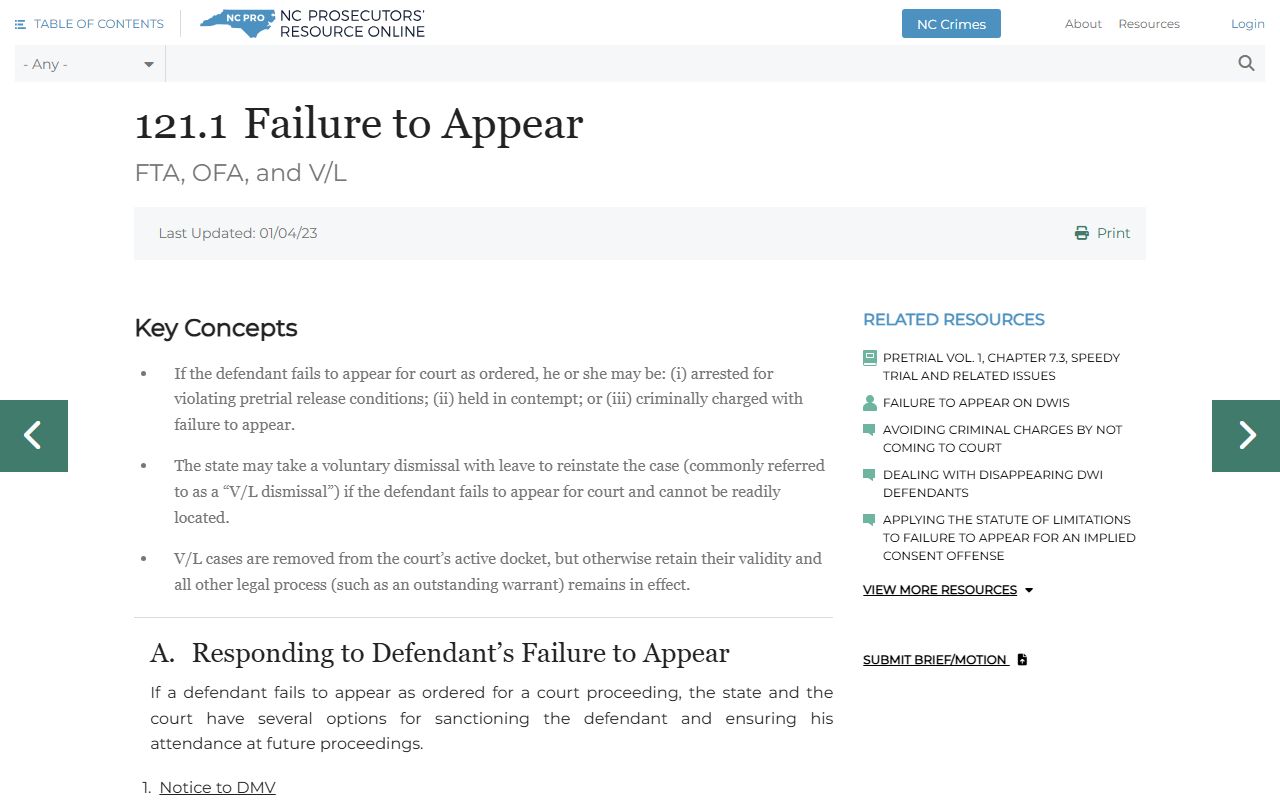
There is no statute of limitations for felonies in North Carolina. So a felony bench warrant for failure to appear can remain active forever. For misdemeanor bench warrants, the state has two years from the missed court date to file the warrant charge. The presiding judge can revoke pretrial release and issue a new order for arrest or bench warrant. A willful failure to appear may also result in contempt of court under G.S. 5A-11, adding another bench warrant to the case.
Judges have broad power to issue bench warrants. They can issue warrants on their own motion or at the request of the district attorney in North Carolina. Every bench warrant issued for failure to appear goes into the eWarrants system.
Bench Warrant Laws in North Carolina
North Carolina General Statute 15A-305 governs orders for arrest and bench warrants. The law spells out when a bench warrant can be issued, what the warrant must contain, and who can execute the bench warrant. The order for arrest must specify the name of the person or give a clear description. The bench warrant must also state the offense charged or the basis for the warrant. Any law enforcement officer with jurisdiction in the county where the bench warrant was issued or where the person is found can carry out the warrant.
Under N.C.G.S. 15A-401, a police officer may arrest a person on a bench warrant at any time and place within their jurisdiction if they have the warrant in hand. An officer who knows a bench warrant exists but does not have the warrant can still make the arrest. The officer must tell the person about the bench warrant and serve the warrant as soon as possible. After a bench warrant arrest, the officer must bring the person before a magistrate without unnecessary delay, as required by G.S. 15A-511.
The magistrate informs the defendant of the bench warrant charges. They explain the right to counsel and the terms of release under Article 26 of the bail statutes. This initial appearance is required for every arrest on a bench warrant or order for arrest in North Carolina.
Note: The official order for arrest form used for bench warrants in North Carolina is AOC-CR-217, available from the NC Courts website.
Are Bench Warrants Public in North Carolina
Yes. Bench warrants are public records in North Carolina. Chapter 132 of the General Statutes defines public records broadly. It covers all documents made or received in connection with public business by any agency of state or local government. Bench warrant records and other warrant records fall under this law. Anyone can request to view bench warrants. You do not need to be a party to the warrant case.
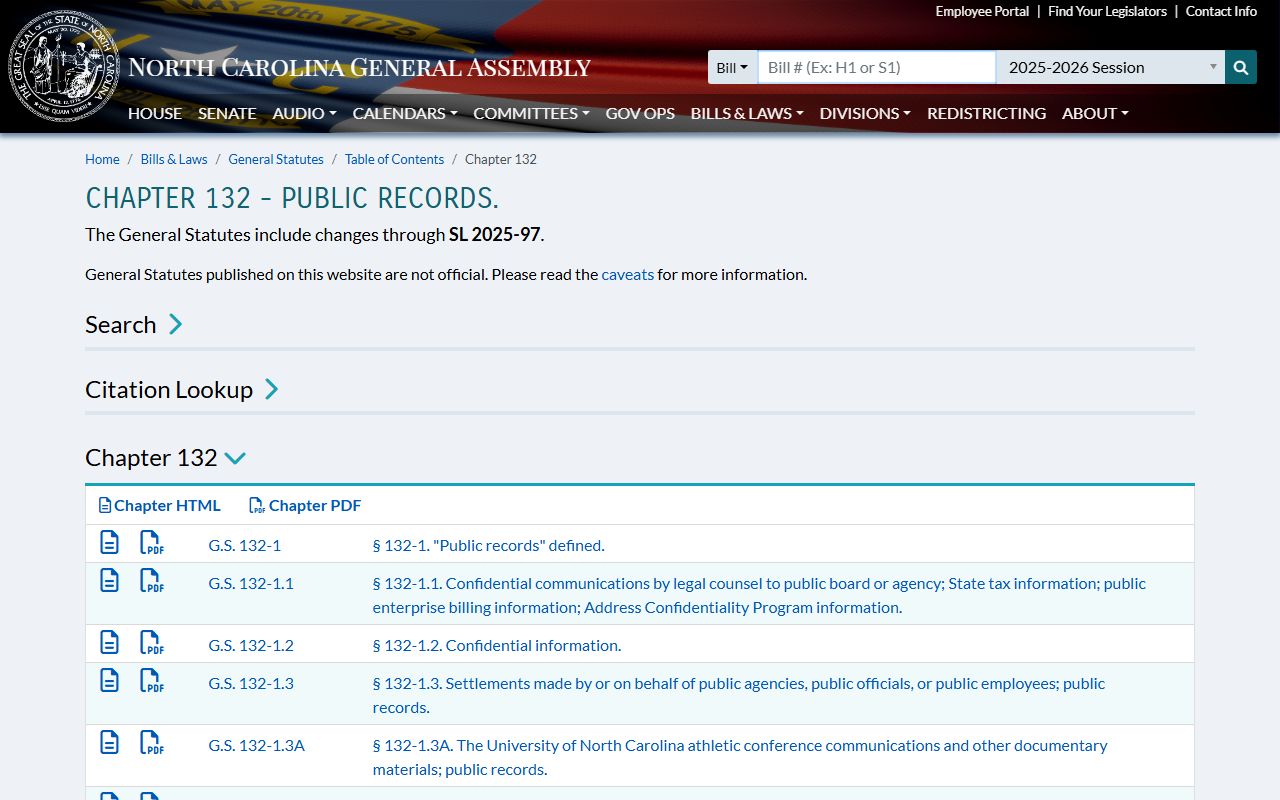
There are limits on bench warrant access. Criminal investigative files are generally not public. But G.S. 132-1.4 requires release of certain warrant information, including details about persons arrested on bench warrants, charged, or indicted, along with the time and place of the warrant arrest. If confidential data is mixed in with bench warrant records, the agency must redact the private parts and release the rest. Agencies cannot deny a warrant records request just because some content is restricted.
Every custodian of public records must allow inspection of bench warrants and other warrant records at reasonable times and provide copies as fast as possible. The law says public records, including bench warrant records, belong to the people of North Carolina.
North Carolina Offender and Warrant Records
The NC Department of Adult Correction runs an offender and warrant search tool with records going back to 1972. This database covers state prison inmates, probationers, and parolees, including those arrested on bench warrants. It does not include county jail data. You can search by name or offender ID for up-to-date warrant status, sentence details, and release dates.
The NC SAVAN system sends free alerts about changes in an offender's custody status, including bench warrant arrests. Victims and their families can get notifications by phone, email, or text when a bench warrant is served. This applies to county jail inmates, state prisoners, probationers, parolees, and registered sex offenders across North Carolina. For warrant records from the Department of Adult Correction, submit a request through their online records portal. Most offender records are confidential, but basic conviction data, bench warrant history, sentence length, and release dates are public in North Carolina.
North Carolina Warrant Record Resources
The NC State Bureau of Investigation serves as the central repository for criminal and warrant information in North Carolina. You can request your own criminal record by sending a Right to Review form with fingerprints and a $14 fee to the SBI in Raleigh. Processing takes three to five weeks. This check shows your full state criminal history, which may include bench warrant activity and past warrant arrests.
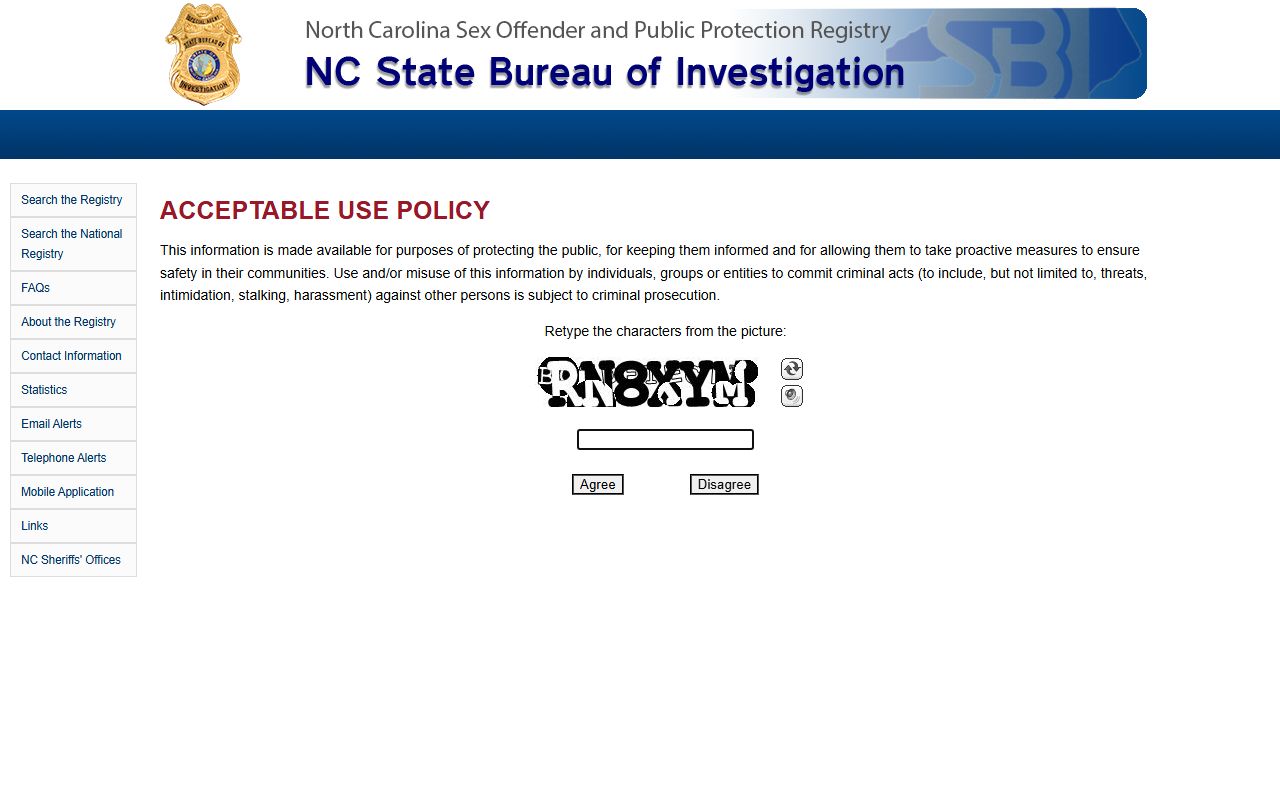
The NC Sex Offender Registry is another statewide database run by the SBI. It shows residential locations of registered sex offenders, some of whom may have active bench warrants. While this is not a dedicated bench warrant search tool, it gives additional context about warrant-related criminal records. In North Carolina, convicted sex offenders must register with the sheriff in the county where they live.
The NC Judgment Search through the eCourts portal lets you look up judgment indexes by party name or case number. Results cover civil, criminal, family, and small claims matters. This can show if a bench warrant led to a judgment or disposition in North Carolina.
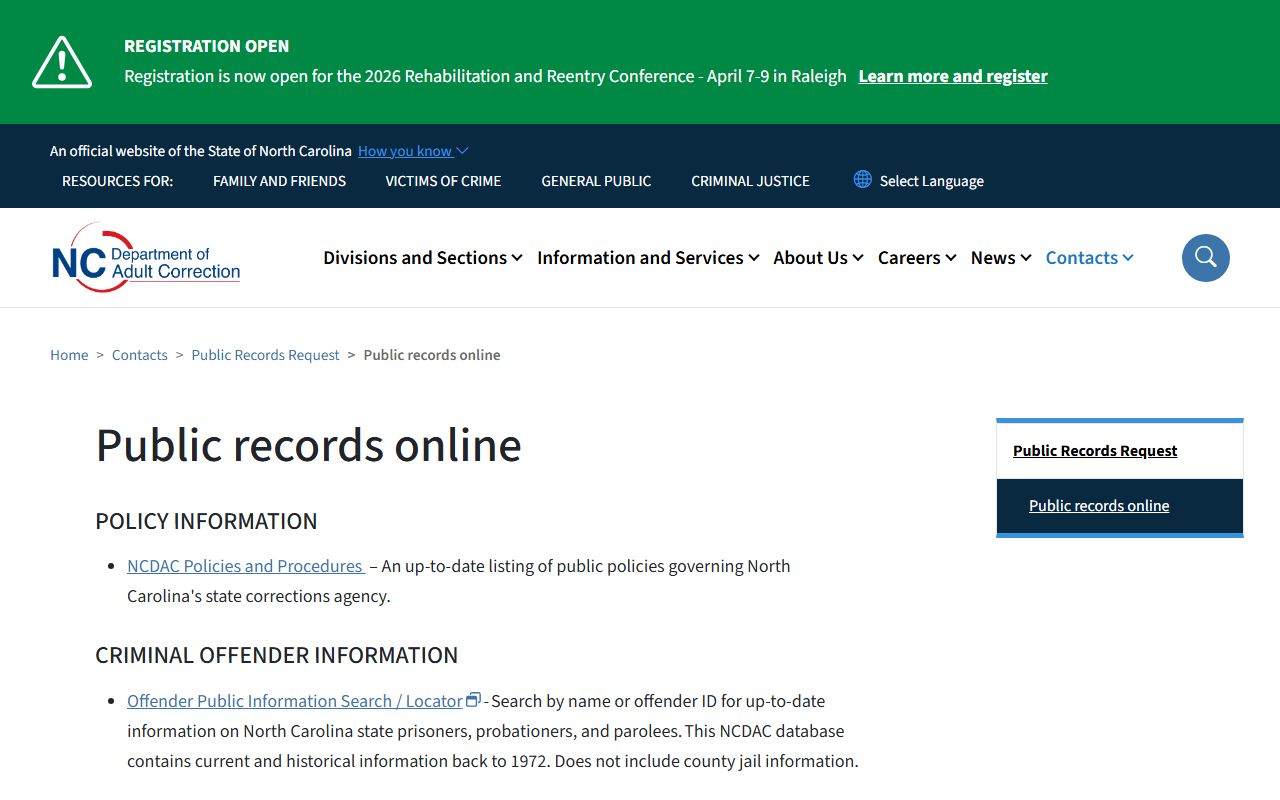
Public records requests submitted through the Department of Adult Correction typically receive a response within five to ten business days. Fees may apply for copies of records related to bench warrants or other court orders in North Carolina.
Resolving a Bench Warrant in North Carolina
An active bench warrant can lead to arrest at any time. A traffic stop, a routine check, or even a visit to the courthouse can trigger a bench warrant arrest. The best path is to deal with the bench warrant before that happens. Talk to an attorney about the warrant. They can help you understand the bench warrant charges and work with the court to arrange a voluntary surrender or a new court date in North Carolina.
Contact the Clerk of Superior Court in the county where the bench warrant was issued. They can tell you the warrant charges, the bond amount, and the next steps. Many counties in North Carolina have public access terminals at the courthouse where you can look up your bench warrant case. You can also call the sheriff's office or check the eCourts portal to verify your bench warrant status. Each county processes bench warrants through the statewide eWarrants system, so the warrant records are current.
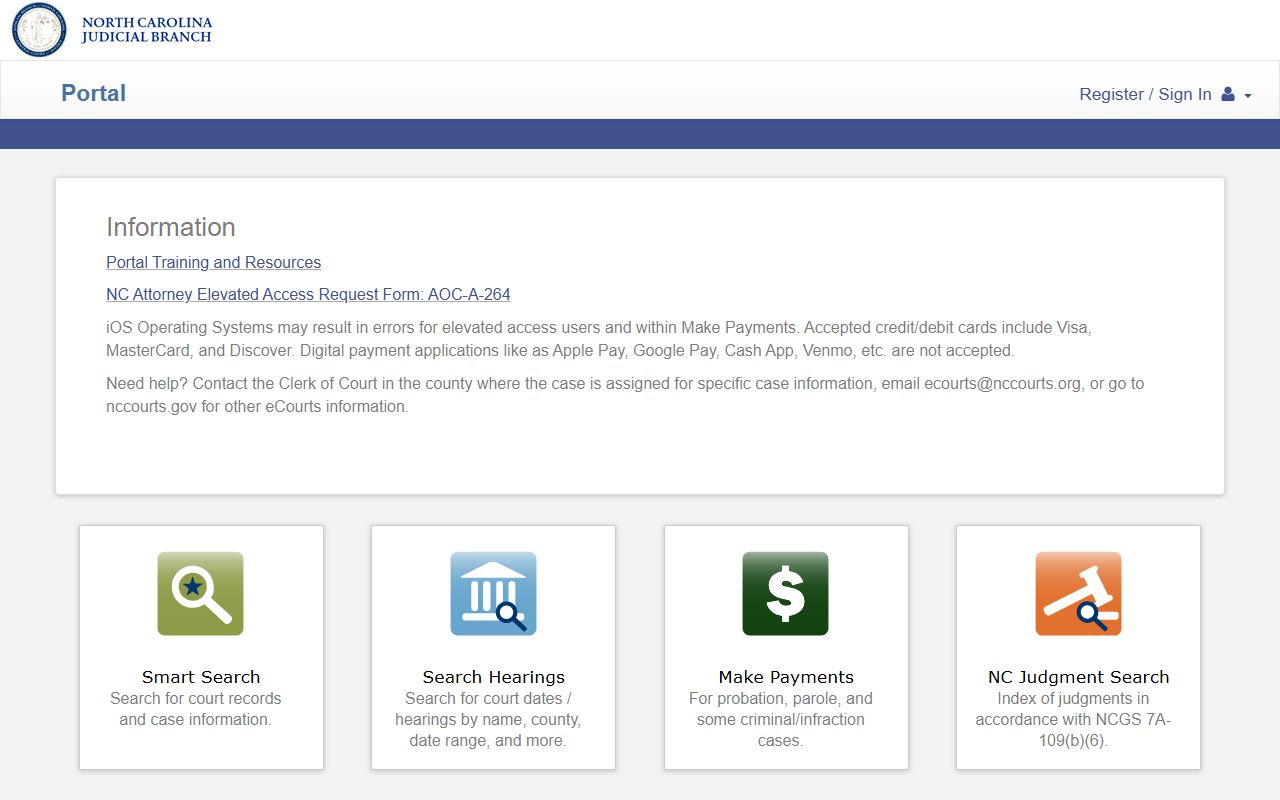
Ignoring a bench warrant does not make the warrant go away. Felony bench warrants have no expiration in North Carolina. The longer you wait to resolve a bench warrant, the worse the situation can get. Additional warrant charges, higher bond amounts, and lost driving privileges are all possible outcomes of an unresolved bench warrant.
Note: Individuals with active bench warrants should consult an attorney before visiting a courthouse, as appearing with an outstanding bench warrant may result in immediate arrest on the warrant.
Browse North Carolina Bench Warrants by County
Each county in North Carolina has its own Clerk of Superior Court and sheriff that handle bench warrants and orders for arrest. Pick a county below to find local bench warrant contact info and warrant search resources.
Bench Warrants in Major North Carolina Cities
Residents of major cities can search for bench warrants through their local police department or county sheriff. Pick a city below to find bench warrant search resources and warrant lookup tools in that area.